Compost Tumbler Ratio: Getting Greens and Browns Right
Compost Tumbler Ratio: Getting Greens and Browns Right
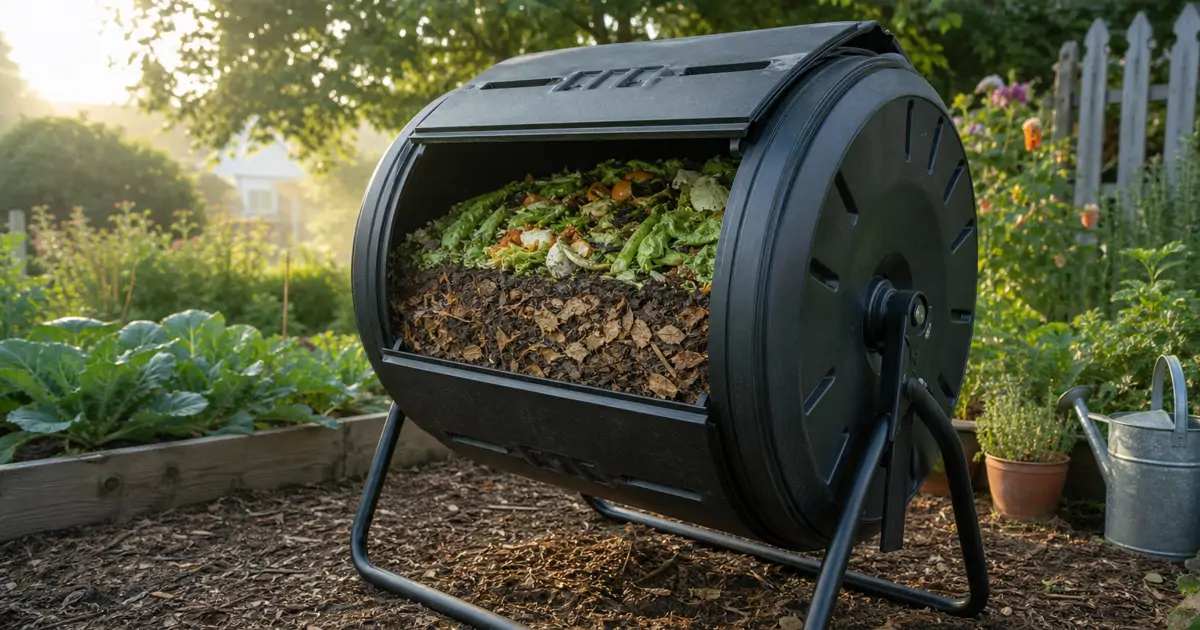
Anyone who has switched from an open compost pile to a tumbler quickly discovers that the rules shift a little. A sealed, rotating drum behaves differently than a heap sitting on bare soil, and that changes how the balance between nitrogen-rich and carbon-rich material actually plays out in practice. Getting the compost tumbler green to brown ratio right matters more here than in a traditional bin, because tumblers don't have the same margin for error that an open pile does.
This matters to anyone who has bought a tumbler expecting fast, mess-free compost and instead ended up with a soggy, smelly drum or a pile of dry material that never seems to break down. Both outcomes usually trace back to the same root cause: an imbalance between greens and browns that the enclosed environment makes worse, not better. This guide walks through why tumblers respond differently to ratio problems, how to think about the ratio of green to brown in compost tumbler setups specifically, and what to watch for as you load and rotate your bin.
By the end, you should have a working mental model for building batches, adjusting on the fly, and troubleshooting the two most common tumbler complaints: sliminess and stalled decomposition.
Why Tumblers Behave Differently From Open Piles
An open compost pile breathes on its own. Rain drains through it, excess moisture evaporates off the surface, and airflow moves through gaps created by gravity settling the material unevenly. A tumbler removes almost all of that natural regulation. It's a closed system, and closed systems amplify whatever ratio mistake you start with.
Moisture and Airflow Inside a Sealed Drum
Because a tumbler has no contact with soil and limited exposure to rain, moisture doesn't escape the way it does from a ground pile. Nitrogen-rich greens like grass clippings, fruit scraps, and coffee grounds carry a lot of water weight. In an open bin, some of that moisture wicks away or evaporates. Inside a tumbler, it has nowhere to go except to soak into whatever carbon material is present. If there isn't enough of it, the drum turns into a wet, compacted mass that starts to smell sour rather than earthy.
This is one reason too much green material in compost causes bigger problems in a tumbler than in a static pile. The excess moisture doesn't just sit at the bottom, it saturates the entire batch every time the drum rotates, since tumbling actively redistributes the wet material rather than letting it settle.
Faster Heat Cycles Change Nutrient Timing
Tumblers also tend to heat up faster than open piles of the same size, largely because rotation mixes materials more thoroughly and the enclosed shape retains warmth. That's usually presented as a benefit, and it often is, but it also means nitrogen gets consumed and can volatilize as ammonia more quickly if there's an excess of greens relative to browns. A pile that smells like ammonia when you open the lid is telling you the nitrogen-to-carbon balance has tipped too far toward greens for the amount of heat being generated.
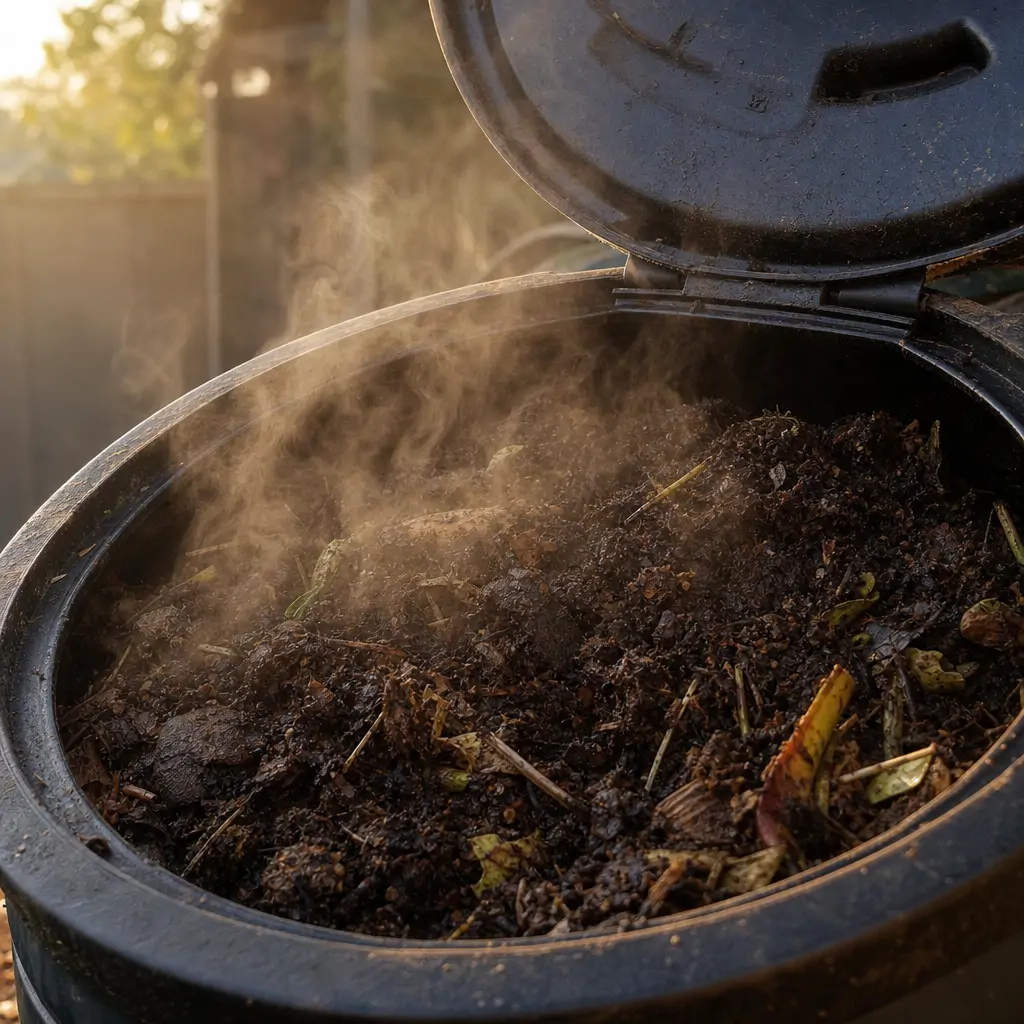
The takeaway here is straightforward: because a tumbler concentrates both moisture and heat, ratio mistakes show up faster and more intensely than they would in an open bin, which makes getting the mix right from the start more important than it might seem.
Getting the Ratio of Green to Brown in Compost Tumbler Right
Most general composting advice suggests something like two to three parts brown material for every one part green, measured by volume rather than weight. That baseline still applies inside a tumbler, but the practical execution looks different because you're loading a closed drum in batches rather than building an open heap you can adjust gradually over weeks.
A Practical Volume-Based Approach
Think in terms of what you're adding each time you open the lid. If you're tossing in a few cups of vegetable trimmings or coffee grounds, pair that with a similar or larger volume of shredded cardboard, dried leaves, or straw before closing the lid again. This habit of matching every green addition with a brown addition prevents the slow drift toward a wet, nitrogen-heavy mix that tends to happen when people add kitchen scraps daily but only remember browns occasionally.
What counts as brown in compost is sometimes misunderstood. Fresh green leaves, despite the color, actually behave more like a green in terms of nitrogen content, while brown, dried, or woody material — shredded newspaper, fall leaves, sawdust, dried grass — is what supplies the carbon a tumbler needs to balance out kitchen scraps. Keeping a stockpile of dry leaves or shredded cardboard near the tumbler solves the most common shortfall, since browns are usually the ingredient people run out of first.
Layering vs. Pre-Mixing Before You Load the Drum
Open bins are often built in layers, but a tumbler's whole purpose is to mix material through rotation, so pre-mixing greens and browns loosely before adding them tends to produce more even results than layering and hoping the tumbling action sorts it out. In practice, dense wet greens can clump together during rotation and resist mixing with drier material if they're added as a solid layer, especially in smaller drum tumblers with limited internal paddles or fins.
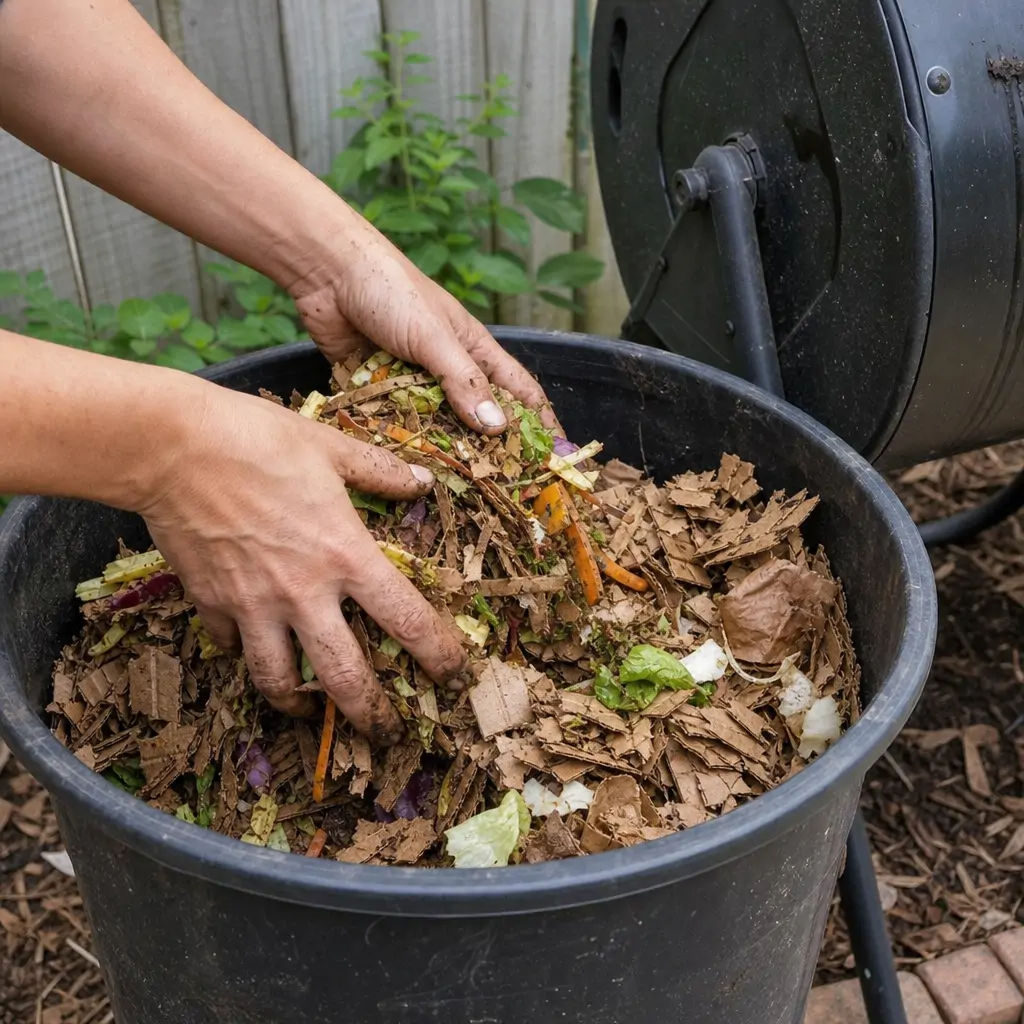
A quick pre-mix in a bucket or wheelbarrow before loading — even a rough one — helps the tumbler's rotation do its job instead of fighting against clumped material. This one adjustment solves a surprising number of complaints about tumblers that never seem to compost evenly.
Common Mistakes and Troubleshooting Tumbler Ratios
Even experienced gardeners run into predictable problems with tumbler ratios, and most of them fall into a handful of recurring patterns rather than being unique to any one setup.
One frequent mistake is treating a tumbler like a trash disposal for daily kitchen scraps without tracking brown inputs at all. This is the most direct path to a soggy, anaerobic-smelling drum, and it's also the scenario where fixing compost with too much brown or too much green becomes an ongoing chore rather than an occasional adjustment. If a batch already smells sour or looks slimy, mixing in dry shredded cardboard, torn paper, or dried leaves and leaving the lid cracked open for a day or two to let excess moisture evaporate usually corrects it within a rotation cycle or two.
The opposite mistake, excess carbon compost fix territory, shows up as a tumbler that never heats up and barely changes in volume over weeks. This typically means there isn't enough nitrogen to fuel microbial activity. Adding fresh grass clippings, a handful of vegetable scraps, or even a diluted source of nitrogen like blood meal can restart the process. A pile stuck at ambient temperature for more than two or three weeks with no visible breakdown is a reasonable signal to intervene rather than wait it out.
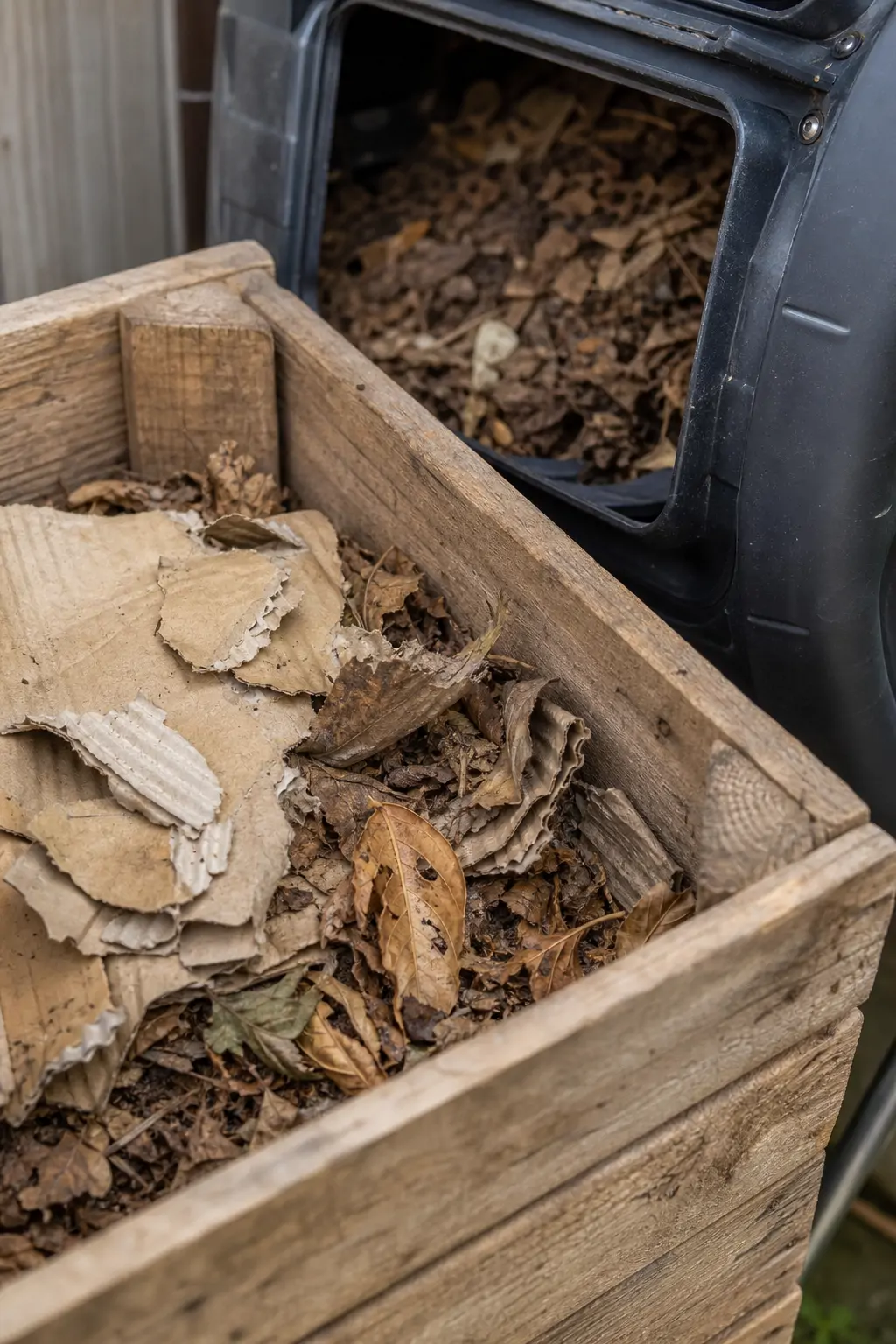
A less obvious issue is particle size. Bulky brown material like whole cardboard sheets or unshredded branches doesn't break down efficiently inside a tumbler's tumbling motion the way it might in a pile that sits undisturbed for months. Shredding or tearing browns into smaller pieces before adding them speeds up decomposition noticeably, since smaller surface area gives microbes more to work with per rotation cycle. This is a detail that most basic ratio explanations skip entirely, but it has a real effect on how quickly a tumbler batch finishes.
Balancing compost for faster breakdown in a tumbler really comes down to consistency: matching greens with browns every time you add material, checking particle size, and paying attention to smell and moisture as early warning signs rather than waiting for a batch to fully stall or turn slimy before making adjustments.
Composting in a tumbler rewards attentiveness more than any single fixed formula. The ratio of brown to green in compost pile setups and drum tumblers follows the same basic chemistry, but the enclosed, rotating environment means small imbalances become noticeable faster, for better or worse. Once you get a feel for how your specific tumbler responds to greens and browns, adjustments become quick and almost automatic.
The core habits worth keeping are simple: match green additions with a similar volume of brown material, shred bulky items before adding them, and treat smell or stalled heat as immediate feedback rather than something to ignore. Following even a basic tumbler compost ratio guide consistently will get most home composters far closer to finished, usable compost than chasing an exact numerical ratio ever will.