How to Make Compost for Garden Soil: A Practical Guide
How to Make Compost for Garden Soil: A Practical Guide
Good garden soil rarely happens by accident. Most experienced growers will tell you it comes from what gets added to it, and compost is usually at the top of that list. If you've ever wondered how to make compost for garden soil that actually improves plant growth rather than just sitting there as decorative mulch, the answer lies less in luck and more in understanding a handful of basic principles that many beginners skip over.
This matters because store-bought soil amendments can only do so much. They add bulk, sometimes nutrients, but rarely the living microbial activity that healthy compost brings to a garden bed. Homeowners with vegetable plots, raised beds, or even a few container plants all benefit from learning how to make compost for my garden using materials that are already sitting in the kitchen and yard. Many people search for how to make compost at home simply because they want a reliable, repeatable method rather than guesswork.
What follows is a closer look at ingredient ratios, the actual mechanics of decomposition, and the small decisions that separate a pile that turns into rich, crumbly compost from one that just smells bad and never breaks down.
Getting the Compost Recipe Right for Garden Soil
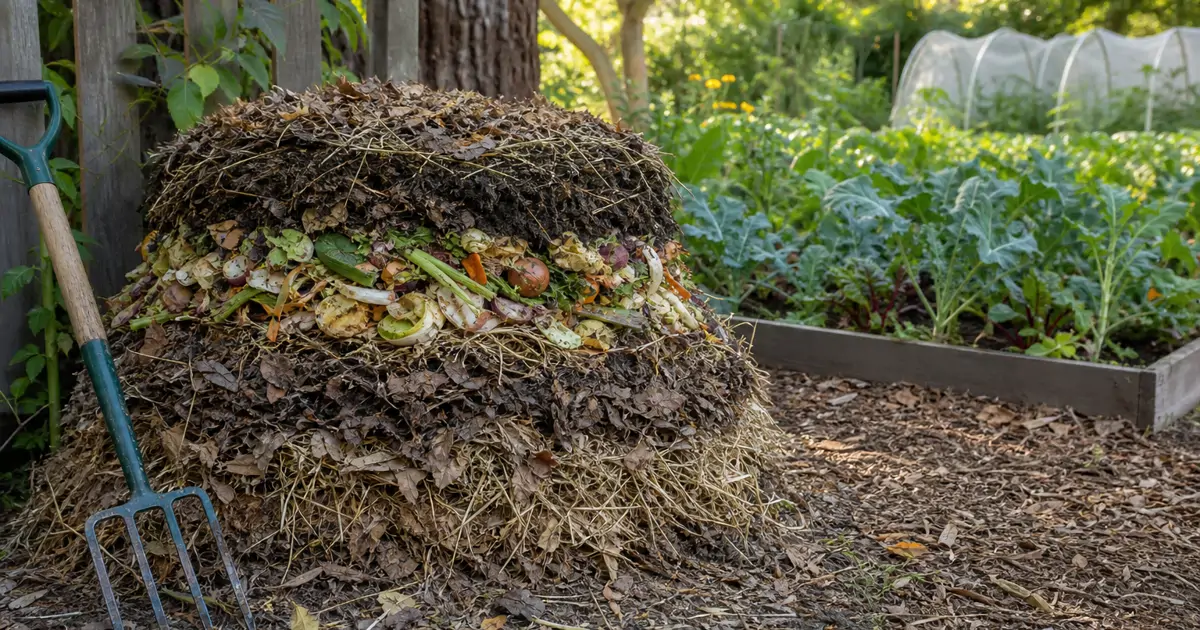
Compost is essentially a controlled recipe, even though it looks like a random pile of organic matter. The two broad categories every composter needs to understand are nitrogen-rich materials, often called greens, and carbon-rich materials, called browns. Greens include vegetable scraps, coffee grounds, and fresh grass clippings. Browns include dried leaves, cardboard, straw, and wood chips. The balance between these two groups, known as the carbon-to-nitrogen ratio, determines how quickly microbes can break the material down and whether the pile heats up properly.
A common misconception is that more greens automatically speeds up composting. In practice, a pile overloaded with nitrogen tends to turn slimy and produce a strong ammonia smell, which is a sign of an imbalanced mix rather than fast progress. The more reliable approach is layering, roughly three parts browns to one part greens by volume, then adjusting based on how the pile smells and feels over the following days.
Choosing Materials for an Organic Vegetable Garden Compost
For anyone specifically trying to figure out how to make organic compost for vegetable garden beds, ingredient sourcing deserves extra attention. Vegetable gardens are sensitive to contaminants that ordinary lawns can tolerate. Avoid adding grass clippings or plant material treated with synthetic herbicides or pesticides, since residues can persist through the composting process and affect sensitive crops like tomatoes and beans later on.
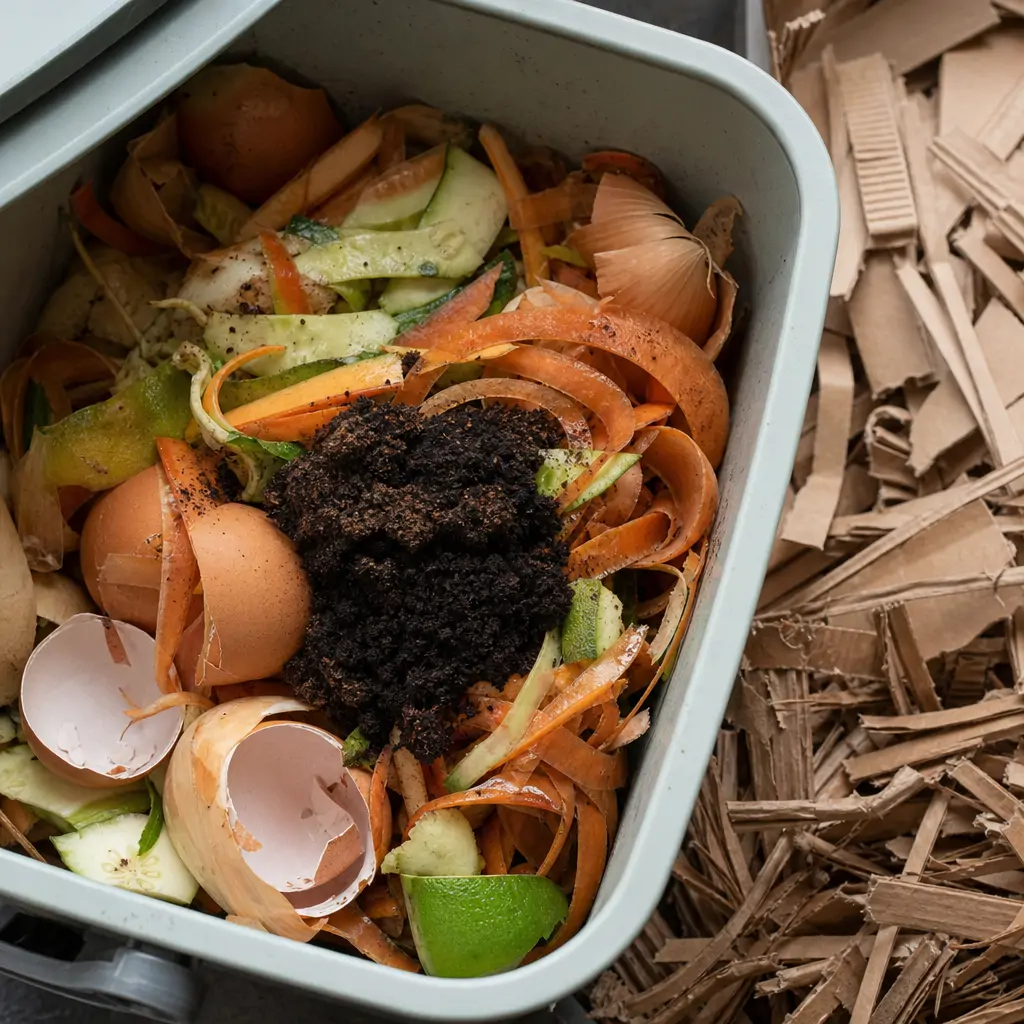
Kitchen scraps such as fruit peels, eggshells, and coffee grounds are excellent additions, but meat, dairy, and oily foods should stay out of a backyard pile. They attract pests and slow decomposition. A frequently overlooked source of good carbon material is shredded cardboard or newspaper, which many households already have on hand and which composts more predictably than woody yard trimmings.
Balance and material selection directly affect how quickly a pile becomes usable soil amendment, and skipping this step is one of the most common reasons compost piles stall.
Building and Managing Your Compost Pile Step by Step
Once the ingredients are sorted, the actual process of building a pile follows a fairly predictable sequence, though the details matter more than most beginner guides suggest. Someone learning how to start a compost bin for the first time often assumes any container will do, but airflow and drainage at the base matter just as much as the materials layered inside. Start with a coarse layer of twigs or straw at the base to allow airflow, then alternate layers of browns and greens, moistening each layer lightly as you go. The goal is a pile that feels roughly like a wrung-out sponge, not soaking wet and not bone dry.
Within a few days, an actively composting pile should begin generating internal heat, sometimes reaching 130 to 160 degrees Fahrenheit at its core. This heat is a byproduct of microbial activity and also helps kill weed seeds and some pathogens, which is one reason properly managed compost tends to outperform simply burying scraps in the ground.
Turning, Moisture, and Aeration
Turning the pile every one to two weeks reintroduces oxygen, which aerobic decomposition depends on. Piles that go untouched for long stretches often shift toward anaerobic decomposition, recognizable by a sour or rotten-egg smell rather than the earthy scent of healthy compost. Moisture management works alongside turning; a pile that's too dry stalls out entirely, while one that's too wet becomes compacted and airless.
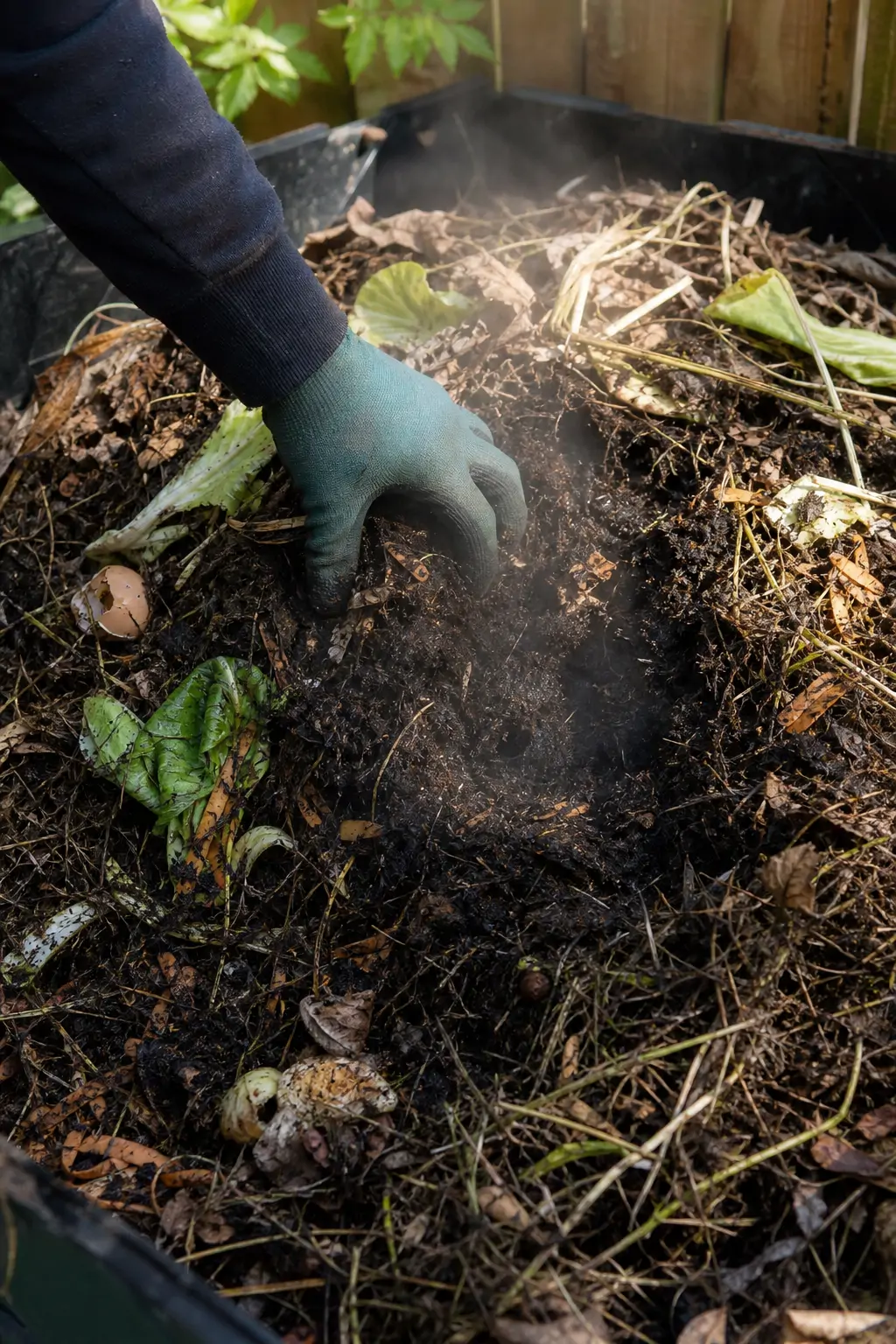
A practical trick many experienced composters use is checking moisture at the center of the pile, not just the surface, since surface moisture can be misleading after rain or watering.
Common Mistakes That Stall Compost
Several recurring mistakes show up across almost every composting setup. Chopping materials into smaller pieces before adding them speeds decomposition considerably, yet many people toss in whole corn cobs or large branches and then wonder why the pile takes a year to break down. Another frequent issue is neglecting to cover the pile, which allows heavy rain to leach nutrients and oversaturate the interior.
Piles built entirely from one material, like a mountain of grass clippings with no dry matter mixed in, almost always fail to decompose properly. This is a mistake even people who've been composting for a while occasionally repeat, especially during lawn mowing season when green material is abundant and dry leaves aren't yet available.
Consistent turning, correct moisture, and balanced ingredients together determine whether a pile finishes in two months or drags on for a year with little to show for it.
Knowing When Compost Is Ready for Garden Soil
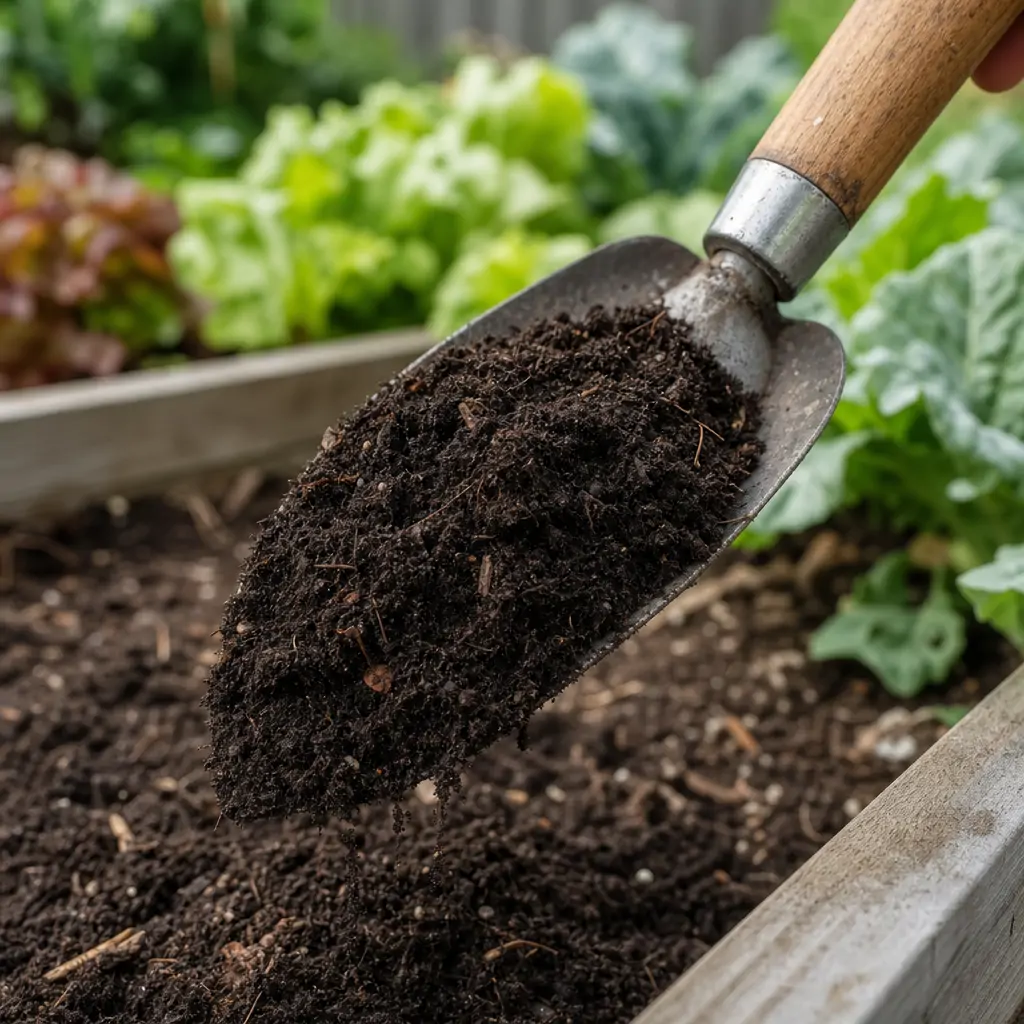
Finished compost has a distinct look and feel that's fairly easy to recognize once you know what to look for. It should be dark brown or black, crumbly, and smell like fresh forest soil rather than anything sour or ammonia-like. Original ingredients should no longer be identifiable, aside from perhaps a few stubborn eggshell fragments or small wood chips.
One detail many guides gloss over is that compost can look finished on the outside while still actively decomposing at the core. Applying immature compost to a vegetable garden can temporarily rob nitrogen from plants as microbes continue breaking down remaining organic matter, sometimes stunting growth in young seedlings. Letting the pile cure for an extra two to four weeks after it appears done resolves this issue in most cases.
Once ready, compost can be worked into garden beds a few inches deep before planting season, or used as a top dressing around established plants. This single step is often what separates a garden that struggles with poor drainage and weak plants from one with structure, moisture retention, and steady nutrient availability throughout the season.
Anyone starting a compost pile at home for the first time will find that patience during the curing stage pays off more reliably than rushing finished material into the ground too early.
Making compost for garden soil isn't complicated once the basic mechanics are understood, but it does reward attention to detail. Balancing greens and browns, managing moisture and airflow, and giving the pile enough time to fully mature all play a role in producing compost that actually improves soil rather than just adding bulk. Whether the goal is feeding a small backyard vegetable patch or building healthier soil across an entire yard, these fundamentals apply the same way every time, and anyone researching how to start composting at home will find that this method works whether the compost is meant for containers, raised beds, or in-ground rows.