How Long Does Cold Composting Take? A Realistic Timeline
How Long Does Cold Composting Take? A Realistic Timeline
Anyone who has tossed banana peels and yard trimmings into a bin and then walked away for a season knows the question that eventually creeps in: is this stuff actually turning into compost, or just sitting there rotting? Cold composting is the low-effort, low-maintenance approach to breaking down organic matter, and it is exactly what most backyard gardeners end up doing whether they planned to or not. But the tradeoff for that convenience is time, and the amount of time involved is far less predictable than most guides let on.
This article digs into the real-world factors that stretch or shrink a cold compost timeline, what a finished pile actually looks and smells like, and where people commonly go wrong while waiting for their pile to mature. If you have ever wondered how long until cold compost is ready to use in your garden beds, the honest answer depends on more variables than most people expect, and understanding those variables is the difference between a pile that finishes in six months and one that is still recognizable as kitchen scraps a year later.
How Long Does Cold Composting Really Take?
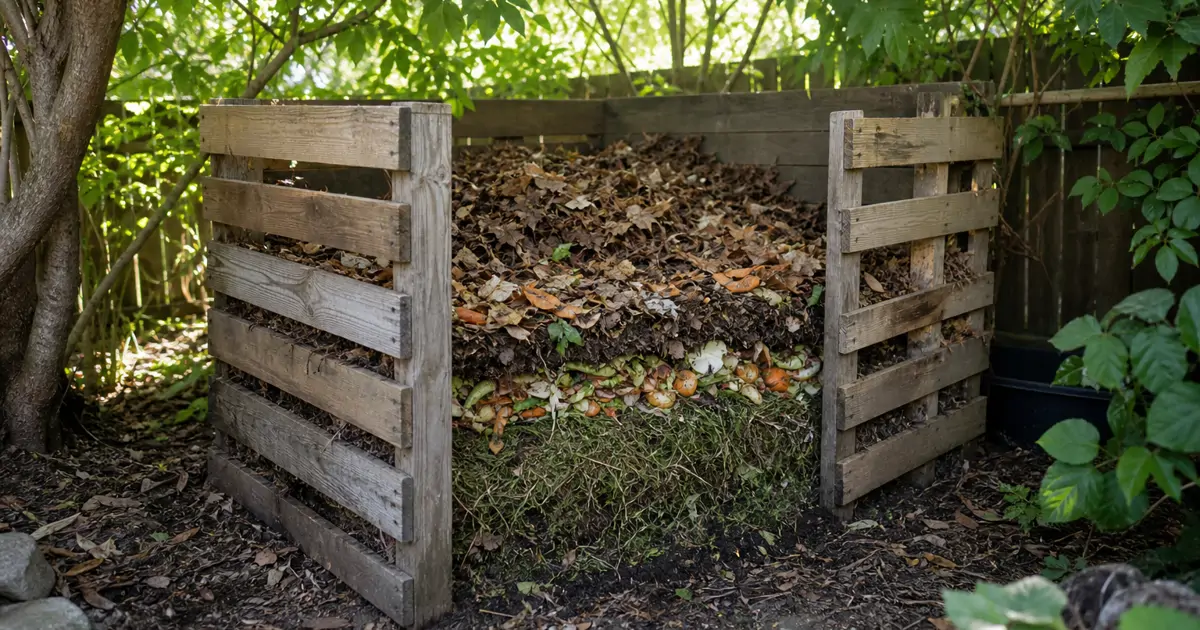
The short answer to how long does cold composting take is somewhere between six months and two years. That is a wide window, and it is wide on purpose, because cold composting relies entirely on ambient temperature, native soil microbes, and whatever mix of materials happens to be in the pile, rather than the deliberate heat-generating process used in active composting methods. There is no turning schedule forcing oxygen into the pile, no careful ratio management, and often no monitoring at all. Materials break down at whatever pace nature sets.
In practice, most home cold compost piles that receive a reasonably balanced mix of kitchen scraps and yard debris become usable within eight to twelve months. Piles that sit mostly untouched, in cooler climates, with large chunks of woody material, can easily take eighteen months to two years to fully break down. A pile made almost entirely of shredded leaves and grass clippings in a warm, humid region might finish closer to the six-month mark. There is not a single universal number, which is part of why so many beginners get frustrated. They expect a fixed cold compost timeline the way a recipe promises a fixed cook time, and organic decomposition simply does not work that way.
It helps to think of cold composting less as a process with an end date and more as an ongoing biological system that you can influence but not fully control. That reframing matters because it changes how people manage expectations, and unmet expectations are a leading reason backyard composters abandon the practice.
Takeaway: expect a range, not a deadline. Most cold compost piles need somewhere between eight months and two years, depending heavily on materials and conditions.
What Determines Your Cold Compost Timeline
Several interacting factors decide whether a pile finishes on the faster or slower end of that range. Understanding them gives you real leverage, even within a passive system, because small adjustments at the start can shave months off the wait without turning cold composting into a labor-intensive chore.
Material Mix and Particle Size
The carbon-to-nitrogen balance of what goes into the pile has an outsized effect on decomposition speed. A pile heavy on carbon-rich material, such as dry leaves, cardboard, and straw, but light on nitrogen-rich greens like vegetable scraps or grass clippings, tends to break down sluggishly because the microbes doing the work need nitrogen to reproduce and stay active. On the flip side, a pile drowning in wet greens with no dry bulking material often turns slimy and anaerobic, which slows things down in a different way and can produce unpleasant odors.
Particle size matters just as much as ratio, and it is one of the most overlooked considerations in casual composting. Whole corn cobs, intact branches, and unshredded cardboard can take years to disappear, while the same materials chopped or shredded into smaller pieces expose far more surface area to microbial activity and break down in a fraction of the time. Many guides gloss over this detail, but it is genuinely one of the easiest ways to shorten a cold compost timeline without adding any extra labor beyond a few minutes with pruning shears before adding material to the bin.
Pile Size, Moisture, and Airflow
A pile that is too small loses heat and moisture quickly and struggles to sustain the microbial activity needed for steady breakdown. Most cold piles work best somewhere in the range of three feet by three feet, large enough to retain some internal warmth and moisture without requiring active management. Piles smaller than that dry out fast, especially in sunny or windy spots, and decomposition stalls almost immediately.
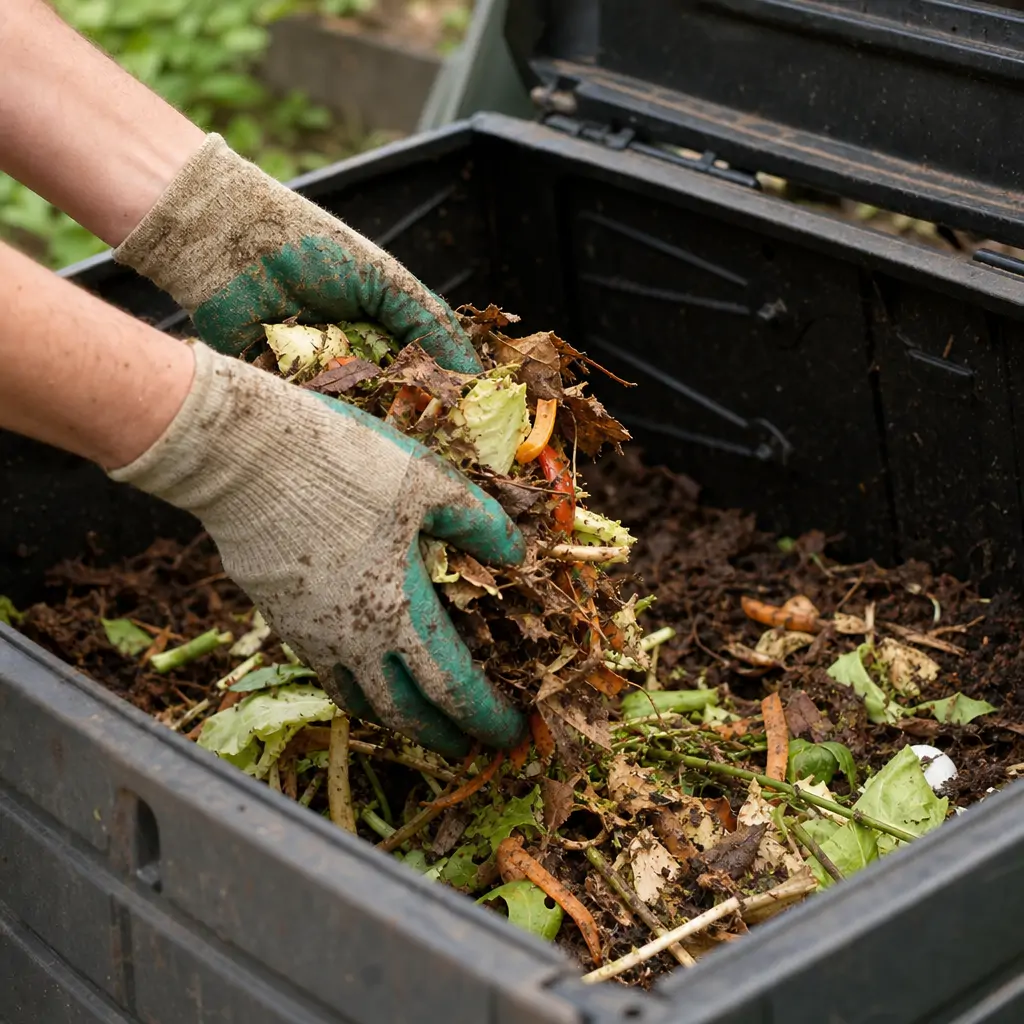
Moisture is a constant balancing act. A pile that feels bone-dry to the touch a few inches in is not supporting much microbial life at all, while a pile that is consistently soggy and matted down tends to go anaerobic, developing a sour smell and slowing the whole process. The ideal texture is often compared to a wrung-out sponge, damp but not dripping. Airflow ties directly into this; a compacted pile with no air pockets, even one with good moisture, will decompose unevenly, often finishing on the outer edges while the dense center stays largely intact for much longer.
Climate, Season, and Location
Geography plays a bigger role in a cold compost timeline than most people initially assume. Warm, humid climates keep microbial activity running nearly year-round, while regions with hard winters effectively pause decomposition for several months at a stretch. A pile started in early spring in a northern state might barely progress before the ground freezes again, meaning the effective working season is closer to six or seven months a year rather than twelve.
Placement within the yard matters too. A bin tucked into full shade retains moisture longer but may run cooler overall, while one in full sun can dry out quickly during summer unless it is watered periodically. Many experienced composters split the difference by placing bins in partial shade, which tends to balance moisture retention against internal warmth reasonably well across most of the year.
How Often You Turn the Pile
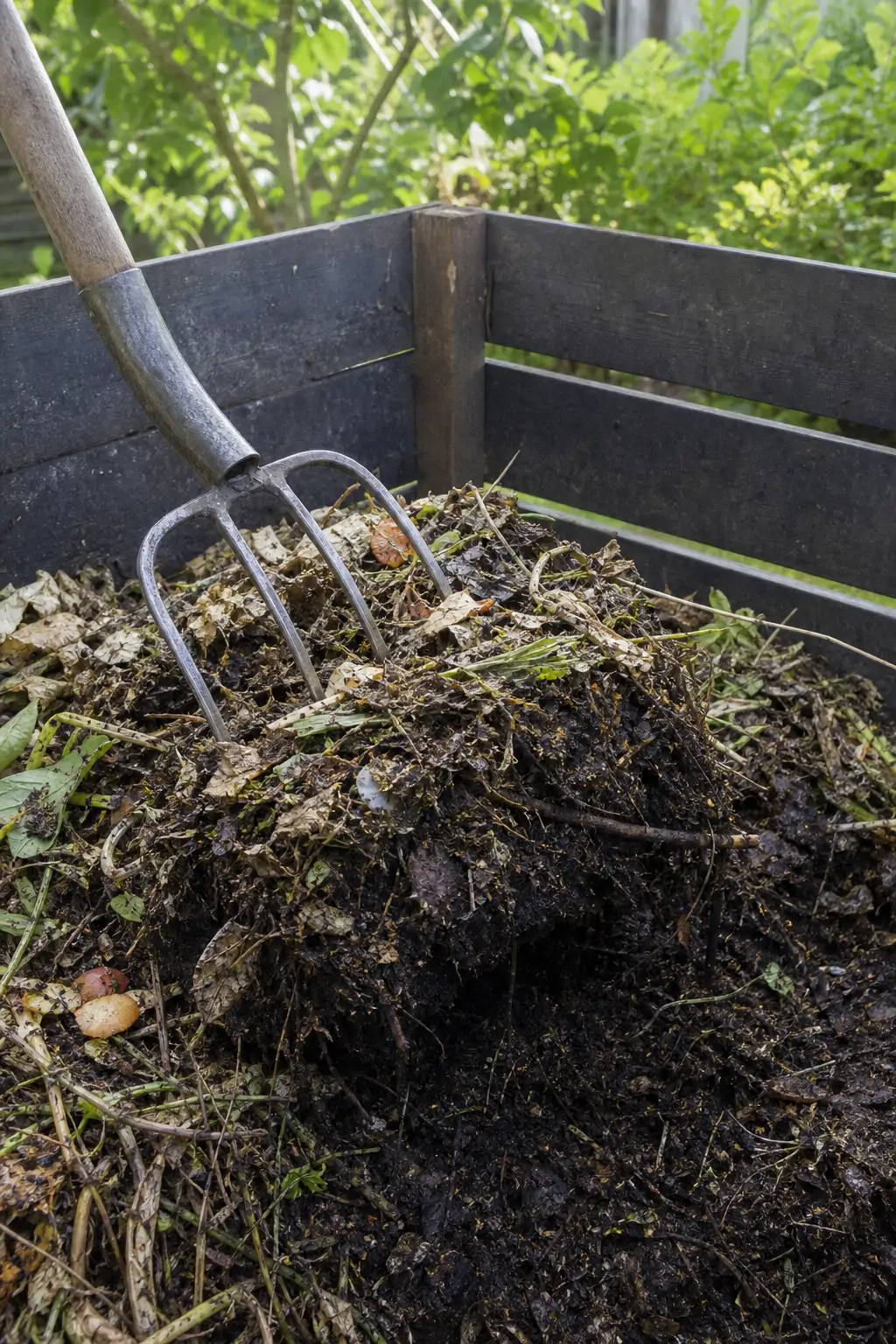
By definition, cold composting skips the frequent turning that defines more active approaches, but never touching it and cold composting are not strictly the same thing. Occasional turning, even just once every month or two, reintroduces oxygen, redistributes moisture, and exposes buried material to more active microbial zones near the pile's surface. This can meaningfully shorten the wait without converting the project into a labor-intensive hot pile.
Piles that are genuinely never disturbed tend to develop compacted, anaerobic pockets, particularly toward the bottom and center, where materials can remain only partially broken down long after the outer layers look finished. This is a common and frequently underestimated reason cold compost timelines stretch well past a year.
Takeaway: material size, moisture balance, climate, and even occasional light turning all shift the timeline more than most beginners expect. Small adjustments add up.
Common Mistakes and How to Know When It's Ready
A few recurring habits are responsible for most of the frustration people report with cold composting. The first is adding large, whole items, think entire squash, thick branches, or whole citrus rinds, and expecting them to vanish on the same schedule as shredded leaves. The second is letting the pile dry out completely during hot months and forgetting that microbes, like most living things, need consistent moisture to keep working. The third, and perhaps the most common, is impatience: digging through the pile every few weeks looking for finished compost and disturbing the layers that were just beginning to establish stable decomposition zones.
Another frequent misstep involves burying meat, dairy, or oily food scraps in a purely passive pile. These materials attract pests and decompose unevenly without the sustained heat that active systems generate, often creating odor problems that discourage people from continuing the practice altogether. Sticking to plant-based kitchen scraps and yard waste keeps a cold pile far more manageable and predictable.
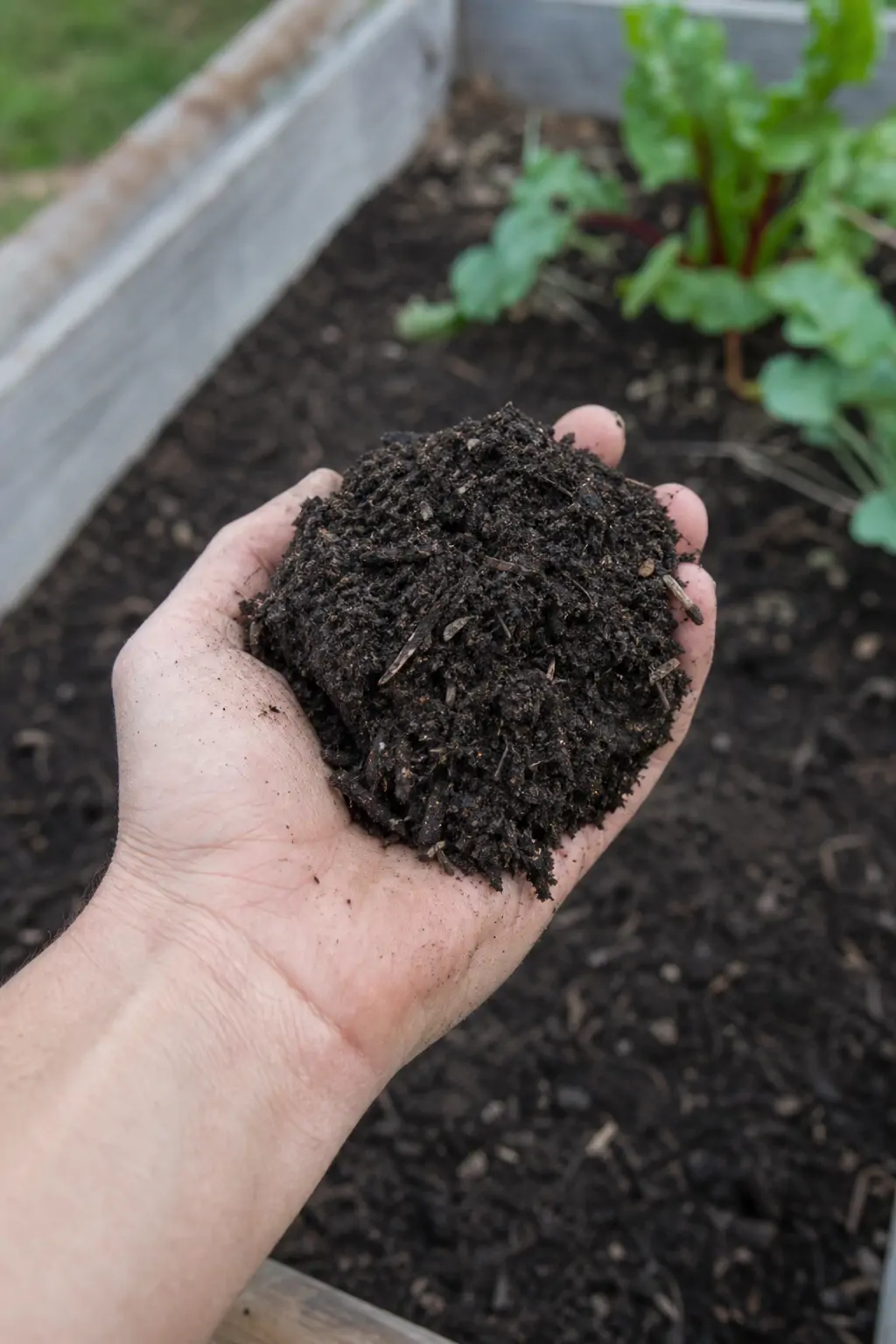
So how do you actually know when it is done? Finished compost has a dark, uniform color, closer to rich chocolate cake crumbs than anything resembling the original ingredients. It smells earthy, almost sweet, never sour or ammonia-like. Original materials should be unrecognizable; if you can still identify an eggshell, an avocado pit, or a chunk of orange peel, the pile needs more time. Texture should be loose and crumbly rather than clumped, slimy, or stringy. Many gardeners test readiness with a simple method: a handful of finished compost squeezed in the fist should hold its shape briefly, then crumble apart easily, without dripping water or feeling gritty.
It is worth noting that a pile does not need to be one hundred percent uniform to be useful. Sifting out larger, unfinished chunks and returning them to a new pile is a common and perfectly reasonable practice, allowing gardeners to use the finer, fully broken-down material right away rather than waiting for every last fragment to disappear.
Takeaway: uneven decomposition, buried whole items, and impatience are the biggest reasons piles seem to take forever. Texture, color, and smell are the real indicators of readiness, not the calendar.
Understanding cold composting vs hot composting helps clarify why the timeline differs so much between methods, and many gardeners eventually decide to run both systems side by side depending on what materials they have on hand. For those weighing options, benefits of cold composting typically come down to minimal effort and lower maintenance, while people exploring how to make cold compost from scratch often start with a simple enclosed bin and build up material gradually. Beginners researching cold composting for beginners frequently ask how their results compare to faster methods, and it is a fair question. Anyone curious about how long does hot composting take will find the answer measured in weeks rather than months, which is the core tradeoff between the two approaches.
There is no shortcut that turns cold composting into a fast process without changing its fundamental nature. What you can control is reducing the variables that needlessly slow things down: chopping materials smaller, keeping moisture in a reasonable range, choosing a sensible location, and giving the pile occasional attention rather than none at all. Do those few things consistently, and most backyard piles land somewhere in the eight-to-fourteen-month range rather than stretching toward the two-year mark. Patience is part of the deal with this method, but it does not have to mean total neglect.